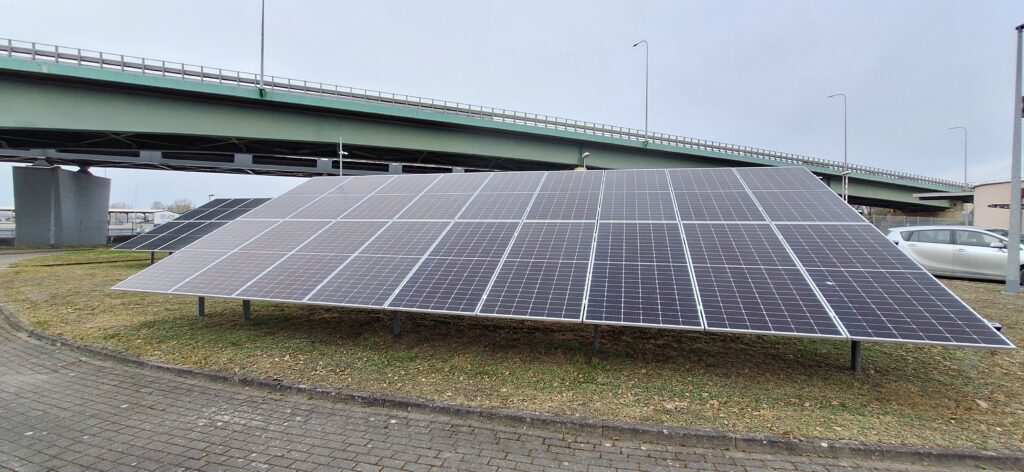
The Port of Elbląg is one of the active partners in the DigiTechPort2030 project, contributing to the decarbonisation of small and medium-sized ports in the South Baltic region. Located along the Elbląg River with access to the Baltic Sea via the Vistula Lagoon, the port is currently undergoing an exciting period of transformation – from the installation of a solar energy system co-financed by DigiTechPort2030 to the planning of a landmark new T2 terminal. We spoke with Arkadiusz Zgliński, Director of the Elbląg Seaport Authority, about the port’s journey toward greener, smarter, and more ambitious operations.
This post is divided into two parts. In the first part, you will find our interview with Arkadiusz Zgliński, where he shares his perspective on the port’s development, sustainability initiatives, and vision for the future. In the second part, we take a closer look at the port itself — its infrastructure, the solar installation co-financed by DigiTechPort2030, and the planned T2 terminal.
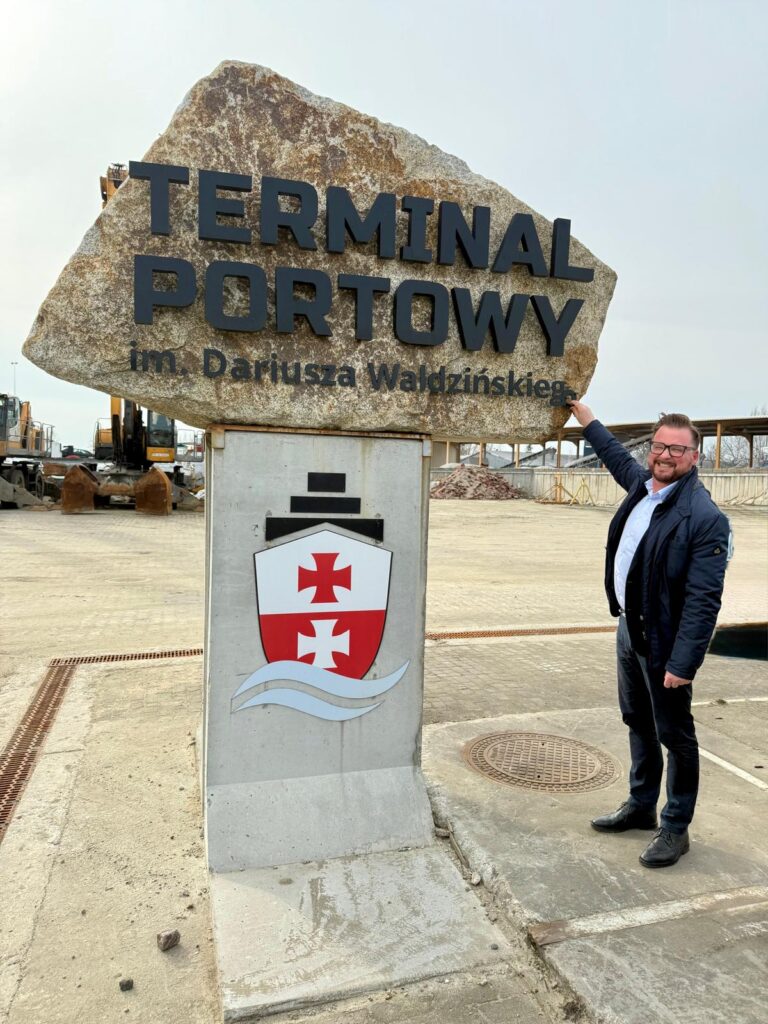
DigiTechPort2030: The Port of Elbląg is a regional river-sea port with a growing role in the South Baltic area. Could you briefly introduce the port and its main activities today?
Arkadiusz Zgliński: The Port of Elbląg is located along the Elbląg River, with new access to the Baltic Sea via the Vistula Lagoon and the Vistula Spit channel. We primarily handle bulk and general cargo, as well as oversized constructions and project shipments, serving regional industries and supporting cross-border trade. Our location gives us a strategic position in the South Baltic region, and we are increasingly focused on strengthening our role as a modern logistics node — what we like to call the “gateway to the Baltic.”
In recent years, we have also been actively engaged in EU-funded initiatives, including DigiTechPort2030, which reflects our commitment to sustainable, eco-efficient and forward-looking port development. Joining this kind of European network has been an important step in our journey.
DigiTechPort2030: The Port of Elbląg is planning a significant infrastructure investment — the new T2 terminal. Could you tell us more about what this project involves and what it means for the port’s future?
Arkadiusz Zgliński: The T2 terminal is our most important strategic investment at the moment, and it is genuinely exciting. The new terminal is designed to allow us to handle vessels up to 100 metres long, which is a significant step up from our current capabilities. It will serve as a modern, multimodal logistics hub — targeting sectors including metallurgy, energy, offshore, infrastructure, and machinery, as well as dual-use cargo.
The project was recently presented publicly by the Mayor of Elbląg, Michał Missan, as part of a broader development vision for the city. It sends a clear signal to both domestic and foreign investors that Elbląg is becoming a serious logistics hub on the map of Poland and Europe. For companies already operating in our region, the new terminal will help optimise supply chains and reduce transport costs. We see it as our opportunity to truly open the port — and the entire region — to the world. However, our main goal is to become a satellite and supporting regional port for major Polish port hubs like Gdańsk and Gdynia.
DigiTechPort2030: What motivated the Port of Elbląg to join the DigiTechPort2030 project, and what has participating in it meant for your port?
Arkadiusz Zgliński: For a port of our size, access to a wider network of partners testing real decarbonisation solutions is something we could not easily build independently. DigiTechPort2030 gave us exactly that — knowledge exchange, practical tools, and collaboration with universities, research institutions, and other ports across the South Baltic region.
The project encouraged us to take a more structured look at our energy consumption and carbon footprint, and to consider what concrete steps we can take. It also opened doors to co-financing opportunities we might not have pursued on our own — including our solar energy installation, which is now one of the results we are most proud of.
DigiTechPort2030: As part of DigiTechPort2030, the Port of Elbląg implemented a solar energy pilot. Could you describe what was installed and what results it has brought so far?
Arkadiusz Zgliński: We installed a 39.39 kWp ground-mounted photovoltaic system, which went live on 12 June 2025. The system uses 78 high-efficiency TOPCon panels and a smart Huawei inverter that allows real-time monitoring of energy flows. In its first year of operation, the installation produced 40.81 MWh of clean electricity — actually slightly more than originally projected — with 90% of that consumed directly within the port.
Annual generation
40.81 MWh
clean electricity
Grid purchase reduction
35%+
less electricity from grid
Energy cost savings
37.5%
~27,208 PLN/year
CO₂ avoided
28.71 t
per year
Payback period
4.2 yrs
below industry average
Self-consumption rate
90%
used on-site
From an environmental perspective, the system prevents approximately 28.71 tonnes of CO₂ emissions per year. I find it meaningful to put that in simple terms: it is the equivalent of planting over 1,300 trees annually. For a smaller port like ours, that is a very tangible contribution. The installation also supports the data-driven approach championed by DigiTechPort2030 — the real-time monitoring gives us a much clearer picture of how we use energy and where we can improve further.
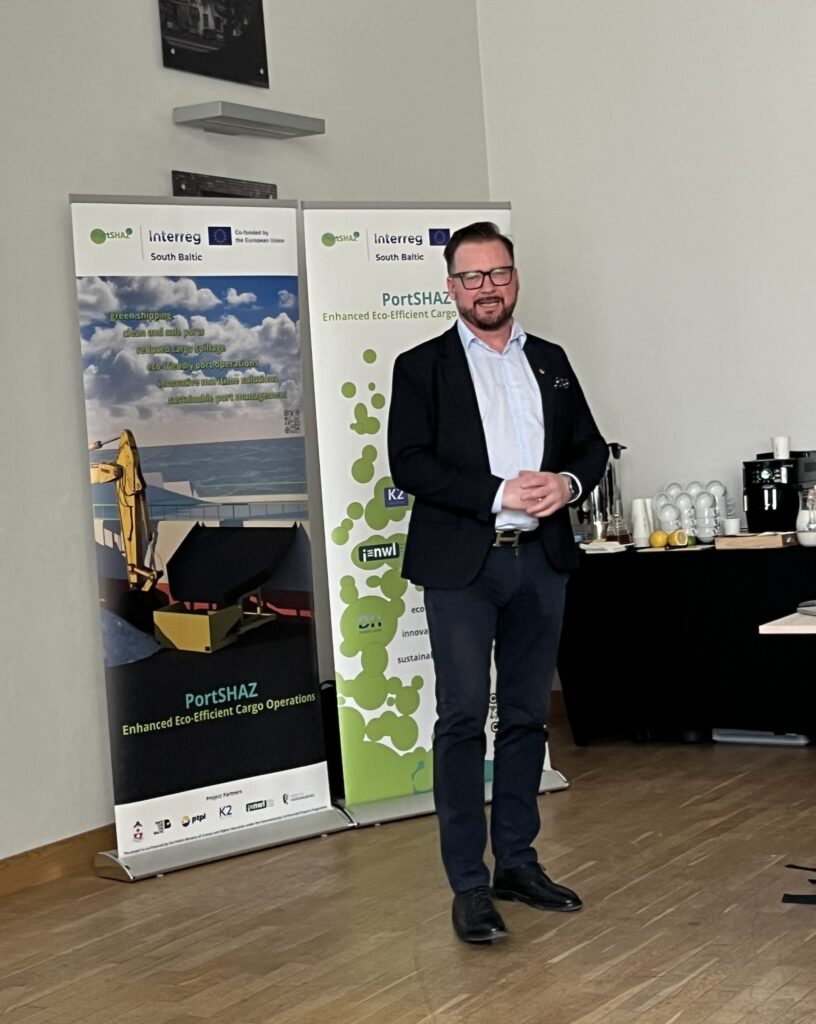
DigiTechPort2030: In March 2026, the Port of Elbląg hosted a joint synergy meeting bringing together three Interreg South Baltic projects: DigiTechPort2030, PortSHAZ, and INCONE60 Green. How did the event go, and what did it mean for your port to host it?
Arkadiusz Zgliński: It was a very rewarding experience, and I am glad we hosted it here in Elbląg. Having partners from three complementary projects in one room made for genuinely rich discussions — around digitalisation, environmental solutions, cooperation, and the future of ports in our region. We also had the opportunity to present our development plans, including the T2 terminal, and to hear from maritime expert Vytautas Paulauskas about Elbląg’s potential within the broader regional transport system. That kind of external perspective is always valuable.
As a port active in both DigiTechPort2030 and PortSHAZ — where we hold a leadership role — we see real value in bringing these initiatives together. Cross-project events like this accelerate learning and help make sure that the work happening in different places actually connects and reinforces each other.
DigiTechPort2030: Looking beyond the current projects, how do you see the Port of Elbląg developing in the years ahead?
Arkadiusz Zgliński: Our direction is clear. We want to complete the T2 terminal investment, continue expanding our use of renewable energy, and gradually digitalise our operations. After the success of the solar installation, we are already exploring potential next steps — including battery storage, expanding the photovoltaic capacity, and eventually onshore power supply for visiting vessels.
More broadly, we want the Port of Elbląg to be seen as a port that grows responsibly — one that combines economic ambition with environmental commitment. The T2 terminal and the solar pilot may look like separate projects, but they reflect the same underlying vision: a port that is modern, efficient, and ready for the future. DigiTechPort2030 has been an important part of building that foundation, and we intend to continue on this path.
DigiTechPort2030: Thank you for your time!
About the Port of Elbląg
The Port of Elbląg is located in northern Poland, approximately 10 km from the Vistula Lagoon, managed by the Elbląg Seaport Authority. Operating as a river-sea port, it handles bulk cargo, general cargo, and project shipments, serving regional industries and cross-border trade across the South Baltic area.
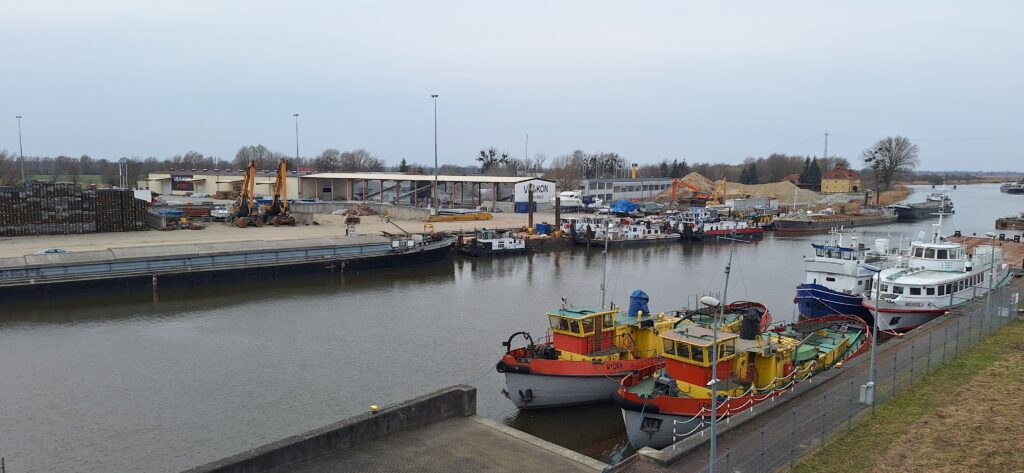
A major step forward in the port’s future is the planned T2 terminal — a modern multimodal logistics hub designed to accommodate vessels up to 100 metres in length, targeting sectors including metallurgy, energy, offshore, infrastructure, and machinery. The terminal was publicly announced by the Mayor of Elbląg as part of a broader development vision for the city and the region.
As part of the DigiTechPort2030 project, the port implemented a 39.39 kWp solar photovoltaic installation — co-financed by the project — which went live in June 2025. In its first year of operation, the system generated 40.81 MWh of clean electricity, covering around 35% of the port’s energy demand and reducing energy costs by 37.5%. The installation prevents approximately 28.71 tonnes of CO₂ emissions annually — the equivalent of planting over 1,300 trees each year.