On 24–25 March 2026, the historic city of Elbląg, Poland, welcomed partners from across the South Baltic region for a two-day Synergy Meeting bringing together three complementary Interreg South Baltic projects: PortSHAZ, DigiTechPort2030, and INCONE60 Green. The event was hosted by the Elbląg Seaport Authority and took place in the beautiful setting of the Old Town Hall (Ratusz staromiejski) in the heart of the city.
Day 1 – Synergy meeting: shared vision for sustainable ports
The first day opened with a welcome from Arkadiusz Zgliński of the Port of Elbląg, setting the tone for two days of knowledge exchange and forward-looking discussion.
Krzysztof Bielazik, Marcin Stankiewicz of WSP Polska, and Marcin Kitala of WXCA presented the development concept of the Port of Elbląg — positioning it as a “Gateway to the Baltic” — followed by an insightful presentation by maritime expert Vytautas Paulauskas from Klaipeda University on the port’s strategic role in regional logistics chains and its long-term growth potential within the wider Baltic transport network.
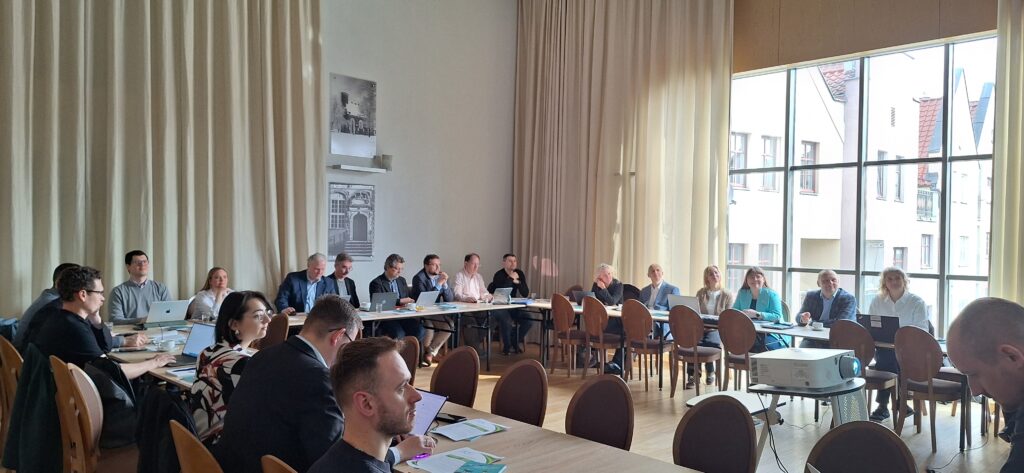
Project partners then took the floor. Patryk Lipka from INCONE60 Green presented their latest results and future plans. This was followed by a presentation from Rafał Koba and Małgorzata Żochowska of PortSHAZ, who showcased practical solutions for reducing cargo leakage and dust emissions at small and medium-sized ports.
The session concluded with contributions from the DigiTechPort2030 team. Marcin Przywarty from the Maritime University of Szczecin outlined the IMO legal framework for decarbonisation, while Joanna Morawska from Euro-Terminal Świnoujście provided a concrete industry perspective on electrifying port equipment within EU regulatory frameworks.
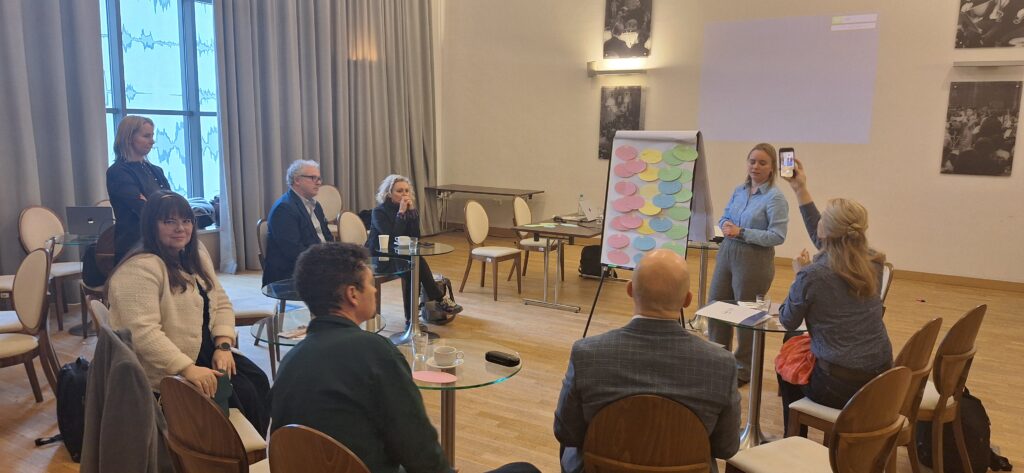
One of the highlights of the day was an interactive workshop led by Lawrence Henesey from Blekinge Institute of Technology, focused on testing and refining the Green Energy Transition Tool for small and medium-sized ports — a key output of the DigiTechPort2030 project. Partners and participants engaged hands-on with the tool, contributing valuable insights that will shape its further development.
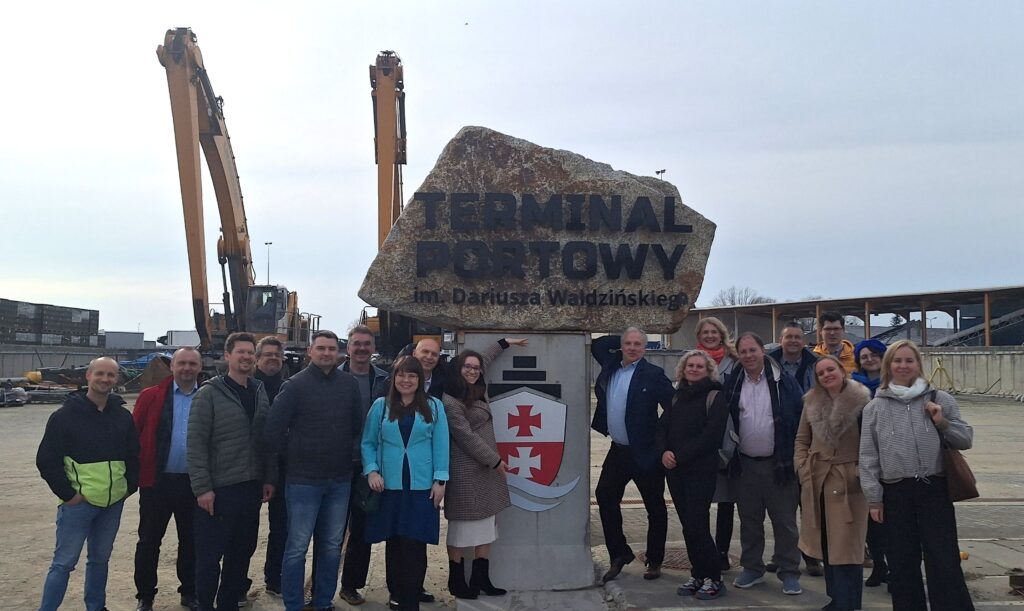
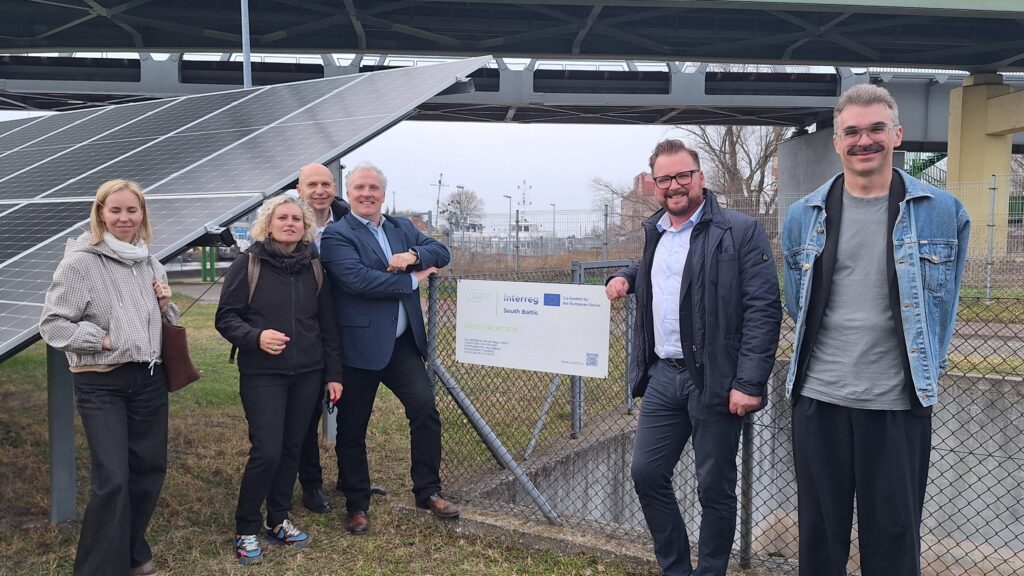
The afternoon included a study visit to the Port of Elbląg, where participants got a first-hand look at the port’s ongoing development. A particular highlight was seeing the solar panels installed at the port — co-financed through the DigiTechPort2030 project — a tangible and visible example of the project’s real-world impact on green port infrastructure. The day concluded with a dinner at Studnia Smaków restaurant — a welcome opportunity for informal exchange among participants from all three projects.
Day 2 – DigiTechPort2030 partner meeting: progress and next steps
The second day was dedicated to the DigiTechPort2030 consortium’s internal working sessions. Partners reviewed the project’s third-year progress, discussed ongoing pilots and deliverables, and aligned on the next steps across all work packages. It was a productive and focused day that sets the direction for the project’s final phase.
Looking ahead
The Elbląg meeting reinforced the strong synergy between the three South Baltic projects and the shared ambition to accelerate the digital and green transition of small and medium-sized ports in the region.